CiSCO Probes
History
At the startup of CiSCO in 1985, all available sample probes were from Europe. The European designs were complex. They included cylindrical filters, that are difficult to clean and expensive to replace, isolation and blowback solenoid valves that can fail and need maintenance, and the umbilical entry was restricted to a single point.
The CiSCO standard probe was designed and manufactured to combat these issues. The goal was to have a high-quality product with a small, simple design, and no moving parts. This was considered essential since probes are located hundreds of feet above ground, and accessible only by ladder.
The CiSCO Design
The CiSCO probe is supported entirely by the CEMS. No plant utilities are required at the stack or duct location. Once the probe is installed, the convenient cover door can be opened for access to easily replace the filter or gaskets. This means it never needs removal for service. The straight through design allows for clearing of any that might plug or block the probe. The CiSCO probe also supports separate heated sample lines and probe support bundles connections.
We have shipped over 1,500 CiSCO probes to date and have only needed to replace half a dozen!
CiSCO manufactures 3 different probes; our standard probe, model EP-750 and 2 different high gas temperature probes, EP-750/H and EP-760/HT.
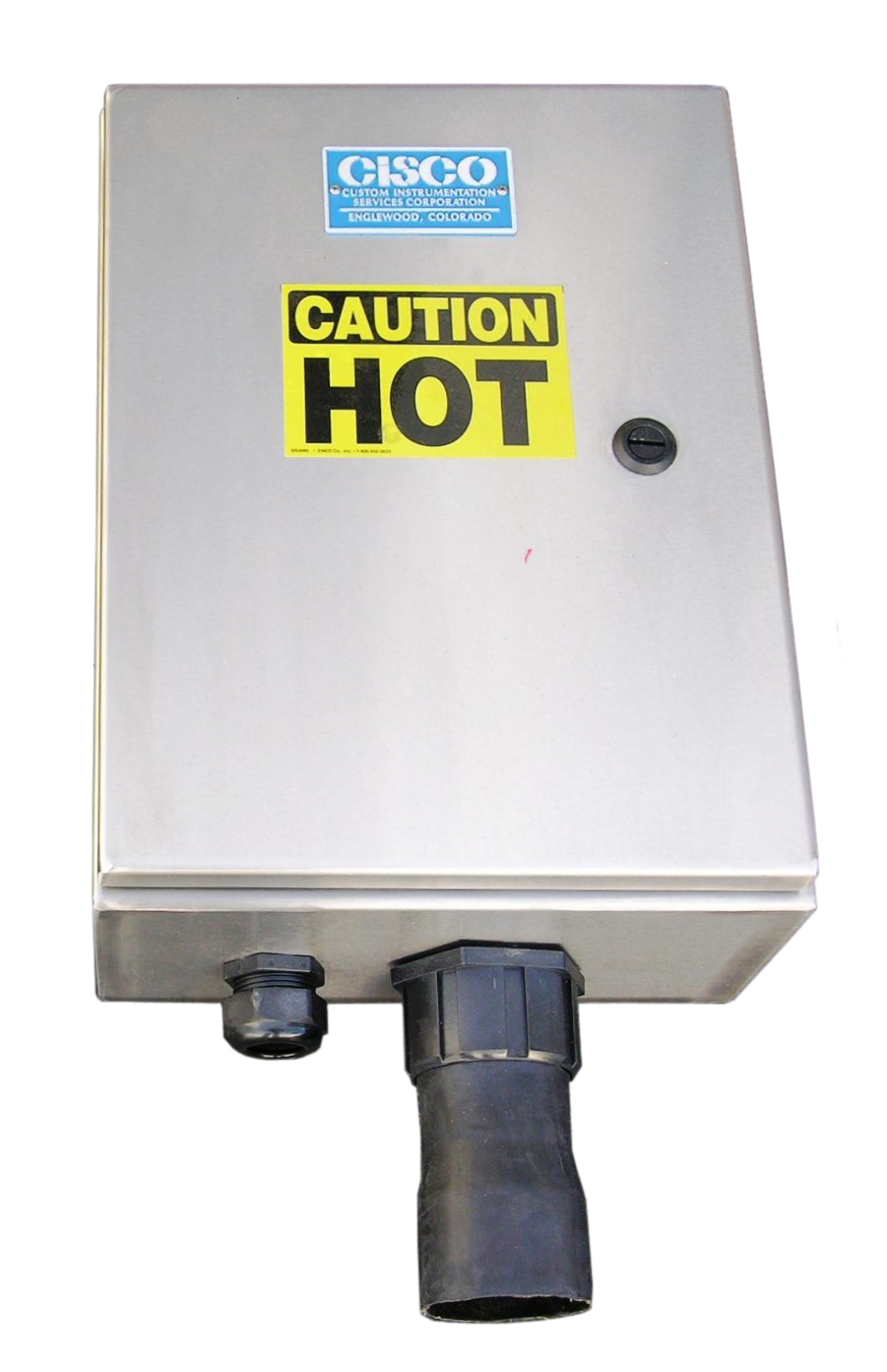
CiSCO Probe Box
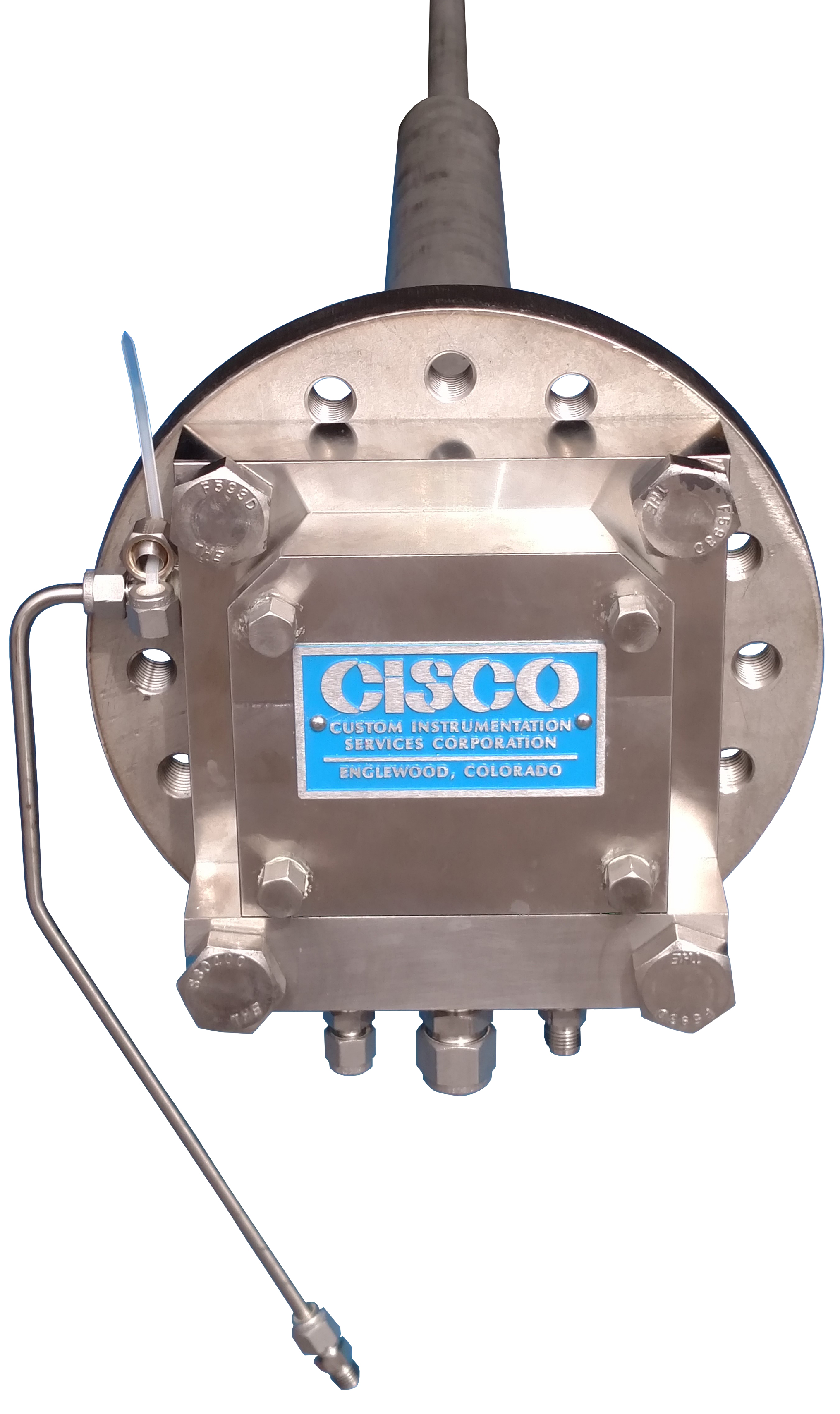
CiSCO Probe Model EP 750
The model EP750 probe is our standard and most popular probe. It includes:
- 316 Stainless Steel body and wetted parts.
- Viton Port seals
- Replaceable ceramic filter disk
- 316 Stainless Steel Insertion Tube
- Supports gas temperatures up to 400 0F
- Comes standard in a steel enclosure with the option of stainless steel
- Has heated filter chamber with 150-watt 120 VAC rod heater
Model EP-750/HT
- 316 Stainless Steel body and wetted parts.
- High temperature port gaskets
- Replaceable ceramic filter disk
- 310 Stainless Steel Insertion Tube
- Supports high temperatures up to 1,000 0F
- 4” ANSI flange
Model EP-760/HT
- 316 Stainless Steel body and wetted parts.
- High temperature port gaskets
- Replaceable ceramic filter disk
- 310 Stainless Steel Insertion Tube
- Supports high temperatures up to 1,000 0F
- 3” ANSI flange used for smaller stacks
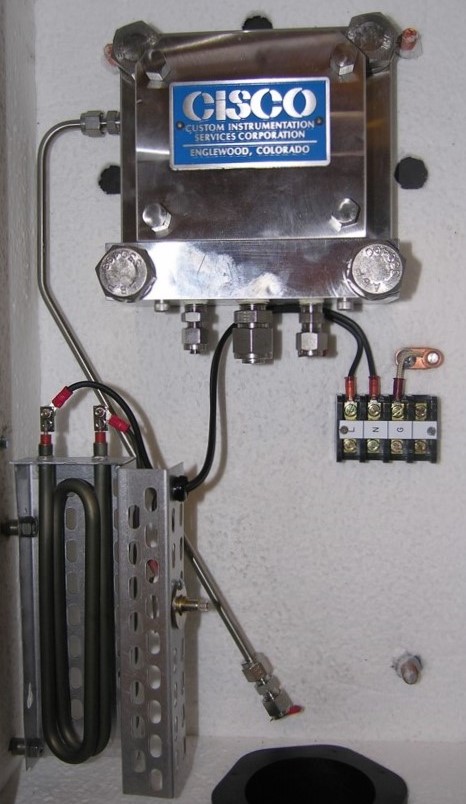
CiSCO Probe Model EP-750/HT in heated enclosure
- Optional heated enclosure provides freeze protection for High Temperature Probes in extremely cold climates.
- Tubing Brace or reinforcement sheathing design allows installation in High Flue gas Velocity situations.
- Flange adapters allow connection to almost any stack port configuration.
- Ammonia conversion for NH3 Slip determination.
CiSCO Probe Support Bundle
Each CISCO Probe installation includes a custom designed support system. This typically includes a Probe Support Bundle and Heated Sample Line.
The Probe Support Bundle includes a ¼” calibration tube, ½” Polyethylene backflush/blowback tube, and a Power Triad for Heated Probes or Probe Enclosures. The Heated Sample Line is normally limited to a single Sample tube, heated to prevent condensation of flue gases in the tube. By keeping these lines separate we avoid the setbacks other suppliers have regarding the permeation of CO off-gassing into the calibration tube, resulting in calibration gas contamination.
This way the CISCO CEMS is ready to measure at first startup and no sample line ‘burn-in’ period is required. The customer also benefits by having a less expensive replacement of a failed Heated Sample line. Other designs include extra control or signal wires and tubes as required by the broad range of applications and ambient conditions we encounter.